Dense breast tissue is common and can hide cancer on a mammogram. Learn the 4 density categories, what your report means, and your next steps.
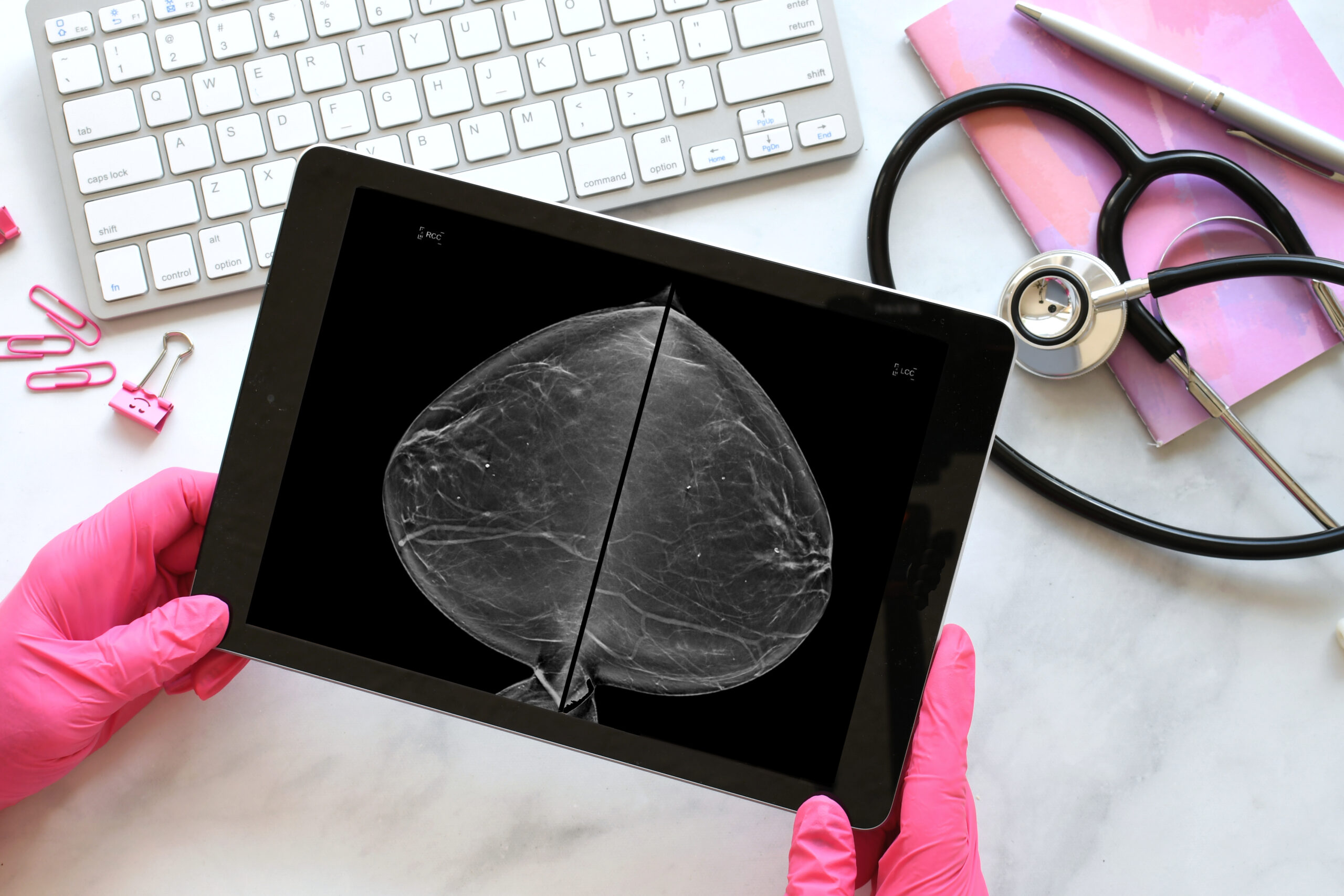
What is dense breast tissue? Dense breast tissue means your breasts have more fibrous and glandular tissue than fat. It is common and normal: about 4 in 10 women who have mammograms have dense breasts. But density can make cancer harder to see on a mammogram, so it is worth understanding.
If you recently saw the words “your breast tissue is dense” on a mammogram report, this guide explains what they mean and what you can do next.
Dense Breast Tissue, Explained Simply
Breasts contain three kinds of tissue: glands that make milk, fibrous tissue that holds everything in place, and fat. When there is more glandular and fibrous tissue than fat, the breast is called dense.
You cannot feel breast density. It has nothing to do with breast size or how firm your breasts are. Only a mammogram can show it.
Why Your Mammogram Report Now Mentions Breast Density
Since September 10, 2024, the FDA has required all U.S. mammography facilities to tell patients whether their breast tissue is dense or not dense (Diagnostic Imaging). The report also encourages you to talk with your doctor about your density and your breast cancer risk. That is why many women in Los Angeles and across the country are seeing this note for the first time.
The 4 Breast Density Categories
Radiologists sort breast density into four categories using the BI-RADS system (OncoLink):
| Category | What it means | Counted as dense? |
|---|---|---|
| A | Almost entirely fatty | No |
| B | Scattered areas of dense tissue | No |
| C | Heterogeneously dense (mostly dense) | Yes |
| D | Extremely dense | Yes |
Density is often higher in younger women. It usually decreases with age, especially after menopause.
Dense Breasts and Mammograms: Why Density Matters
On a mammogram, dense tissue looks white. Some tumors also look white. Finding a small cancer in dense tissue can be like spotting a snowball in a snowstorm.
This is one of the main limitations of mammography. It does not mean mammograms are not useful. A mammogram is still the standard screening test for breast cancer. It means some women with dense breasts may benefit from an added test.
Dense breast tissue is also linked to a modestly higher risk of developing breast cancer. Your doctor can look at your density together with your family history and other risk factors.
What to Do If You Have Dense Breasts
- Keep up your regular mammograms. Density is not a reason to skip them.
- Ask your doctor about your category. C and D are considered dense.
- Review your overall risk. Family history, prior biopsies and genetics all matter.
- Ask about supplemental screening. Breast ultrasound and MRI are the most common options. See our guide to breast screening options for dense breasts, including automated breast ultrasound (ABUS).
- Know your normal. Report any new lump, skin change or nipple change, even if your last mammogram was clear.
Frequently Asked Questions
Is dense breast tissue bad?
No. It is common and normal. It simply makes mammograms harder to read and slightly raises breast cancer risk.
Can I feel if my breasts are dense?
No. Only a mammogram can show density.
Can breast density change?
Yes. It often decreases with age and after menopause.
Do I need extra screening if I have dense breasts?
Not always. It depends on your density category and your overall risk. Talk with your doctor.
Is breast ultrasound safe?
Yes. Ultrasound uses sound waves, with no radiation and no compression.
Breast Ultrasound in Beverly Hills
If your doctor recommends a supplemental exam, PrimaVue Diagnostic Imaging offers breast ultrasound, including ABUS whole-breast screening, at our Beverly Hills office at 50 N La Cienega Blvd, Suite 205, Beverly Hills, CA 90211, serving patients across West Los Angeles. Call (310) 598-6208 or book a visit online.
Related reading: Why Breast Density Matters: Understanding Your Screening Options · What Is ABUS?
Sources: Diagnostic Imaging: FDA breast density notification rule · OncoLink: BI-RADS and breast density